
Weather Radar Home review
 Analysis by GetAllApps
Choosing a weather app sounds simple until you need more than a sunny-or-rainy snapshot. Some people want a quick forecast at a glance; others care most about radar and alerts when conditions turn unsettled. Weather Radar Home is aimed at the second group, while keeping the home screen central to the experience. I’d consider it if I want weather information close at hand rather than another app I have to remember to open.
What to weigh before choosing a weather app
The best choice depends on how you actually check the weather. If you mainly want a basic outlook before getting dressed, a straightforward forecast app may be enough. If you often plan around changing conditions, radar and alerts become more important. And if convenience is your priority, having weather information right on the home screen can make a meaningful difference to your routine.
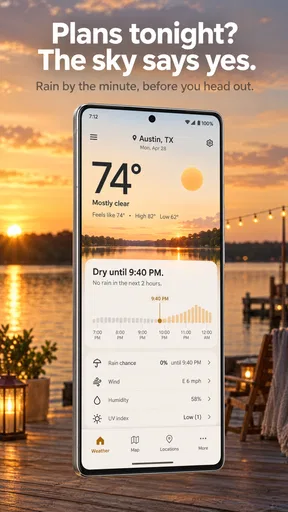
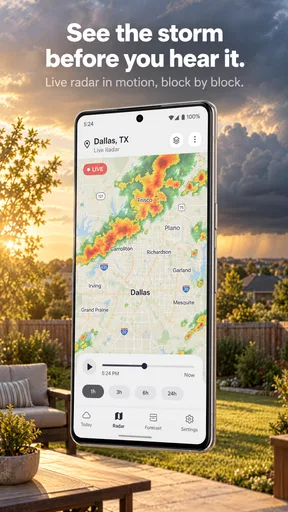
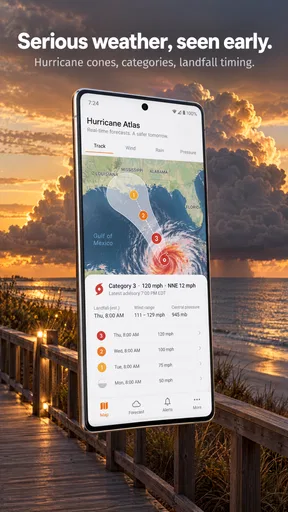
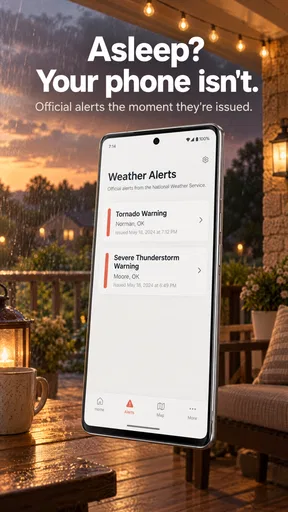
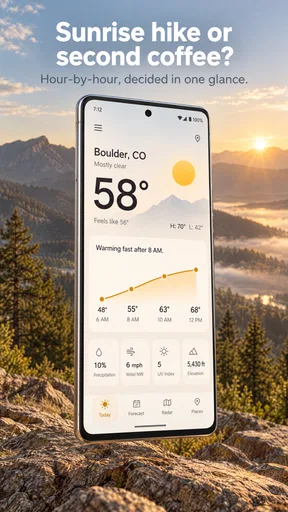
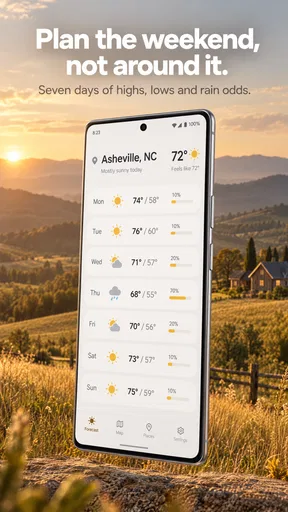
Weather Radar Home puts its emphasis right in its name and store summary: storm radar, alerts, and live weather forecasts, with the home screen as the focal point. That gives it a clear identity among weather apps. It is not presented as a general-purpose lifestyle hub; its appeal is the practical task of keeping an eye on current and changing weather.
I’d also think about how much detail I want. Some users prefer a clean, quick glance, while others like to follow radar and check for alerts before heading out. Weather Radar Home’s stated focus suits people who value those weather-specific tools. If I rarely look beyond the day’s general conditions, a simpler alternative might feel more natural.
A home-screen-first approach
The home screen focus is the app’s most distinctive selling point. It suggests a way to make weather checks part of ordinary phone use, rather than a separate task. That can be handy when I’m deciding whether to take an umbrella, planning a walk, or checking conditions before leaving. The idea is simple: make useful weather information easier to notice.
That convenience is especially relevant for people who check forecasts repeatedly. Opening an app every time can become a small annoyance, so a home-screen-oriented option may better match their habits. On the other hand, if I prefer keeping my home screen uncluttered, or I already have a weather setup I like, this particular emphasis may not be a strong reason to switch.
Who is likely to get the most from it?
I can see the clearest fit for users who want a combination of radar, alerts, and live forecasts without losing sight of the quick-glance experience. It may also suit someone who is trying to make weather checks more habitual: seeing information on the home screen can be a useful nudge to look before plans are set.
The app is free, which makes it easy to try without making a purchase decision first. It is rated for Everyone, and its current version is 4.0.46. The app has an average rating of 4.2 from around 2.9 thousand ratings, with 706 reviews. Those figures offer a bit of context, but they cannot tell me whether its particular style will suit my own phone habits. Personal preference still matters more than a rating when the choice is between a glance-first tool and a more detailed weather routine.
Where Weather Radar Home stands out
Its strongest point is focus. Rather than making a broad promise about every possible weather-related need, it highlights a recognizable set of priorities: storm radar, alerts, live forecasts, and access from the home screen. For someone who wants to keep tabs on the weather throughout the day, that combination is easy to understand and potentially useful.
I also like that the concept connects information with convenience. Radar and alerts matter most when they help me make a decision, and placing weather at the center of the phone experience is a sensible way to encourage regular checks. The benefit is not just having another forecast available; it is reducing the effort of finding it when a change in conditions matters.
There is a practical audience for this kind of design. Commuters, people who spend time outdoors, and anyone whose plans depend on the weather may appreciate a tool that keeps forecasts and alerts close. That doesn’t mean it will replace every source of weather information, but it gives the app a straightforward role in a daily routine.
Useful without demanding a new routine
A weather app is most helpful when it fits naturally into the way I already use my phone. Weather Radar Home’s home-screen positioning points toward that kind of low-friction use. Rather than asking me to build a complicated system around it, the central idea is to bring weather information into a place I visit often.
That can be a better fit than an app that feels designed for occasional, deep dives. I might still open a detailed forecast when I’m planning ahead, but quick access is valuable for everyday decisions. If the main thing I want is to know whether conditions are changing, the combination of radar, alerts, and live forecasts gives this app a coherent reason to exist.
Its place among the alternatives
Weather apps tend to fall into a few broad styles. Some are built around a simple daily forecast and a minimal interface. Others put more emphasis on maps and changing conditions. There are also apps that serve as part of a wider collection of phone utilities. Weather Radar Home sits closest to the radar-and-alerts end of that spectrum, with home-screen access as an important part of its pitch.
That positioning helps narrow the decision. If I want the quickest possible summary and nothing more, a basic forecast app may be a better match. If I want a broader set of weather information or a different presentation style, another category may suit me. If my priority is having radar, alerts, and forecasts close at hand, Weather Radar Home is the more relevant option to consider.
These alternatives are not automatically better or worse; they simply answer different preferences. A minimalist app can feel calmer, while a map-oriented option may appeal to someone who likes to inspect conditions visually. A home-screen-centered app makes sense when immediate access is the priority. The right choice depends less on a universal winner and more on which information I check most often.
What to consider before switching
Changing weather apps has a small but real adjustment cost. I may need to get used to a different layout and decide where the app belongs in my daily routine. If I already rely on another app’s presentation, even a useful alternative can feel unfamiliar at first. That doesn’t make switching difficult, but it is worth asking whether the new focus solves a problem I actually have.
Weather Radar Home is most compelling when its core idea addresses a specific frustration: having to open an app repeatedly to check conditions, or wanting radar and alerts to be more prominent in everyday use. If I do not have that frustration, the appeal is less immediate. A change makes more sense when I know what I want to improve, rather than simply installing another forecast app out of curiosity.
It also helps to think about phone habits. The home screen is useful real estate, and not everyone wants weather information there. Some people prefer to keep it clear or reserve it for other tools. Others like seeing essential information without taking an extra step. Before switching, I’d decide which side of that preference I’m on; it is a better guide than comparing apps by name alone.
The app has been available since Aug 17, 2024, and it has reached over 500 thousand installs. Those details suggest that it has found an audience, but they should be treated as context rather than a guarantee that it will suit every user. I’d still judge it by whether the home-screen-first weather experience feels useful in my own day-to-day routine.
Making the choice without overthinking it
I’d keep the decision simple: identify the weather information I check most, then choose the app style that makes it easiest to access. If my answer is “a quick daily outlook,” a simpler forecast tool may be enough. If it is “radar, alerts, and live conditions,” this app’s focus is closer to what I want. If I’m already happy with my current setup, there may be no compelling reason to change.
That approach also avoids expecting one app to be perfect for every task. Weather Radar Home has a clear role as a convenient weather companion, not necessarily as the only source anyone will ever need. Its value depends on whether its priorities line up with mine. The free price makes trying it a low-commitment decision, while my own comfort with the home-screen approach is what should determine whether I keep it.
My recommendation
I’d recommend Weather Radar Home to people who want weather information to be easy to check and who place particular value on storm radar, alerts, and live forecasts. Its home-screen focus gives it a practical angle, especially for anyone who checks conditions often. With an Everyone content rating and a free download, it is an accessible option for users who want to explore that style of weather app.
I’d be less inclined to recommend it to someone who wants only a bare-bones forecast or who is already satisfied with a different way of checking the weather. Those users may not gain enough from its particular emphasis to justify changing habits. The decision is ultimately about convenience and priorities, not about finding one weather app that suits everybody.
Overall, Weather Radar Home is worth considering when keeping an eye on changing conditions is part of the day. Its focus is clear, and its home-screen approach may make regular checks feel more natural. If radar, alerts, and quick access match what I’m looking for, I’d give it a try; if I only need a simple forecast, I’d choose an alternative built around that lighter routine.
Pros and cons
Pros
- Radar imagery helps track approaching rain and storms.
- Home screen widgets provide quick access to weather conditions.
- Location support makes it easy to check forecasts for different places.
- Severe weather alerts can help users prepare for changing conditions.
- Radar maps offer a visual alternative to reading forecast details.
Cons
- Radar coverage and detail may vary by location.
- Frequent updates can increase mobile data usage.
- Weather alerts depend on location access and notification settings.
- Some features may require a paid upgrade.
- Forecast accuracy can vary with local conditions.


